

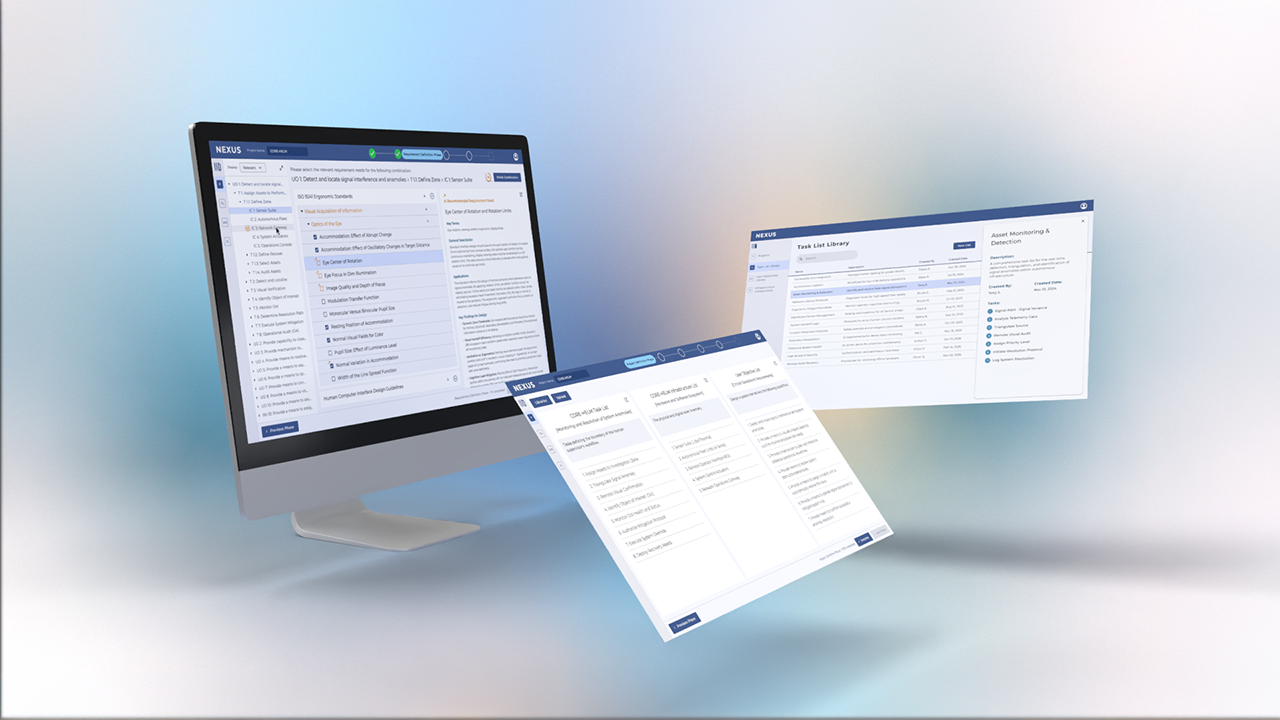
AI-Driven Product Architecture
Intelligent Tool for Human Requirements
Client: Perceptronics Solutions
Focus: UI Design | Systems Thinking | Design Systems
NDA Disclaimer: To comply with non-disclosure agreements, the copy and data in this case study have been adapted from a Department of Defense (DoD) requirements management tool to a fictional industrial infrastructure theme. The structural design, interaction patterns, and system logic remain authentic to the original project.
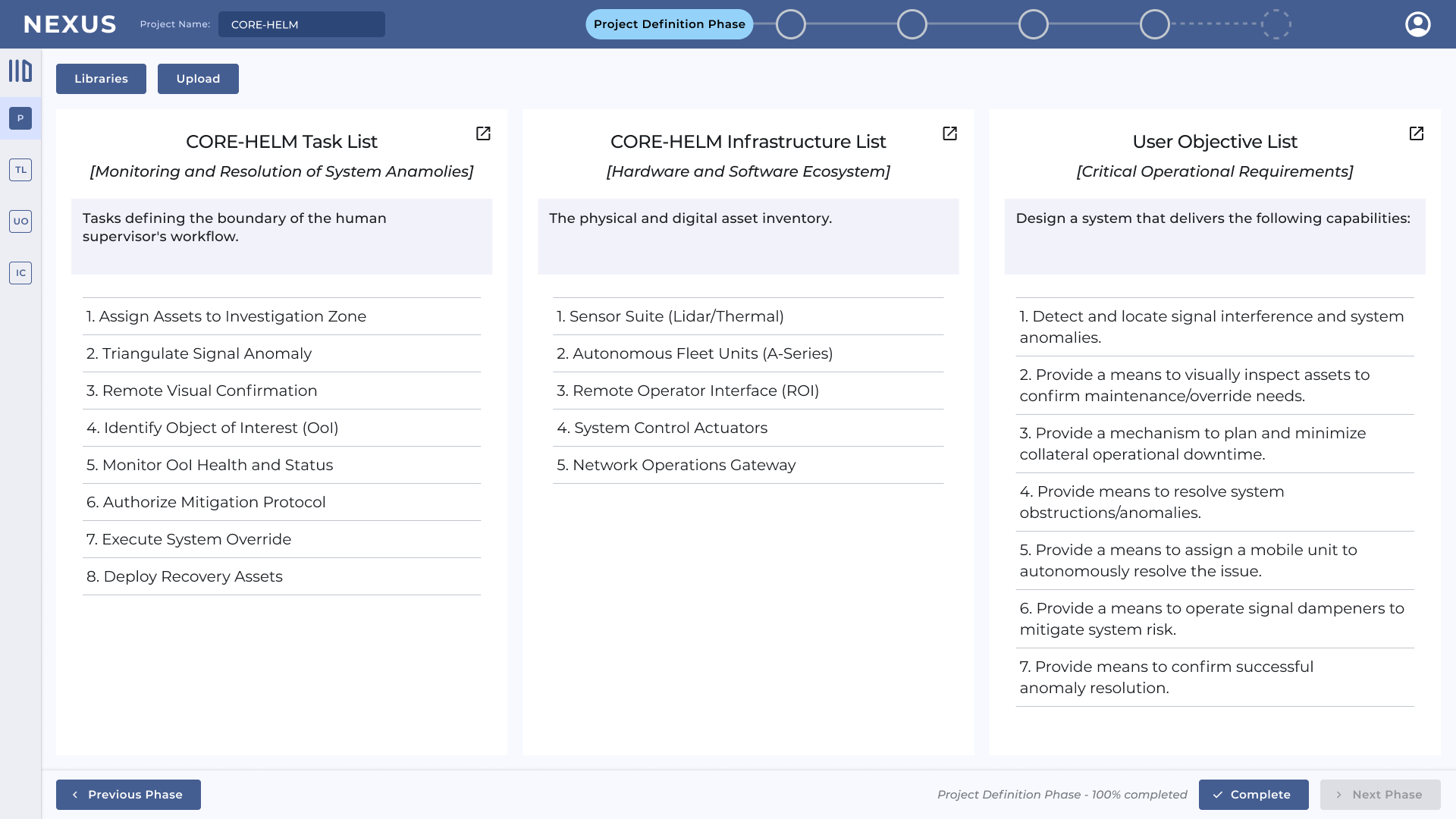
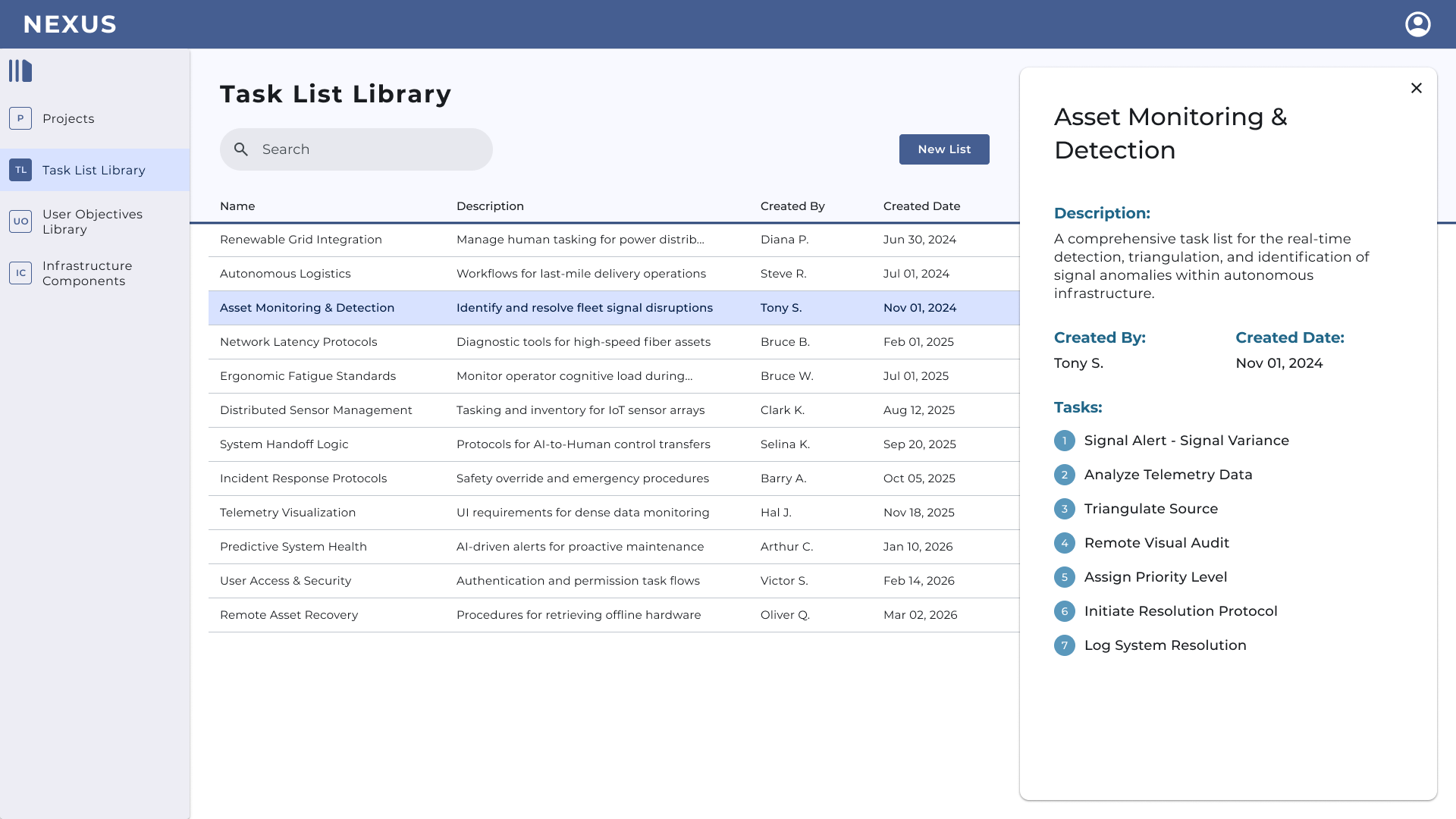
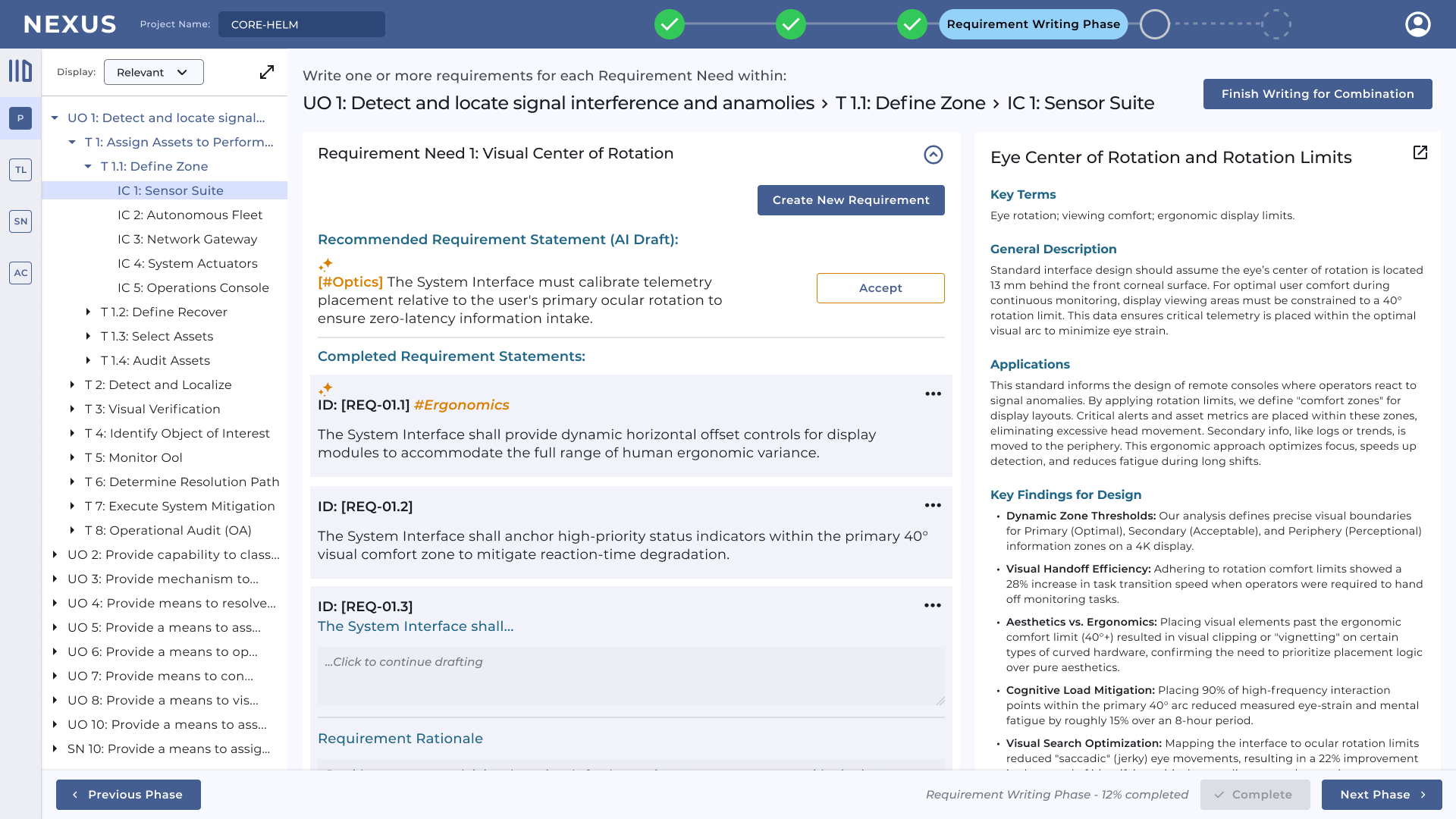
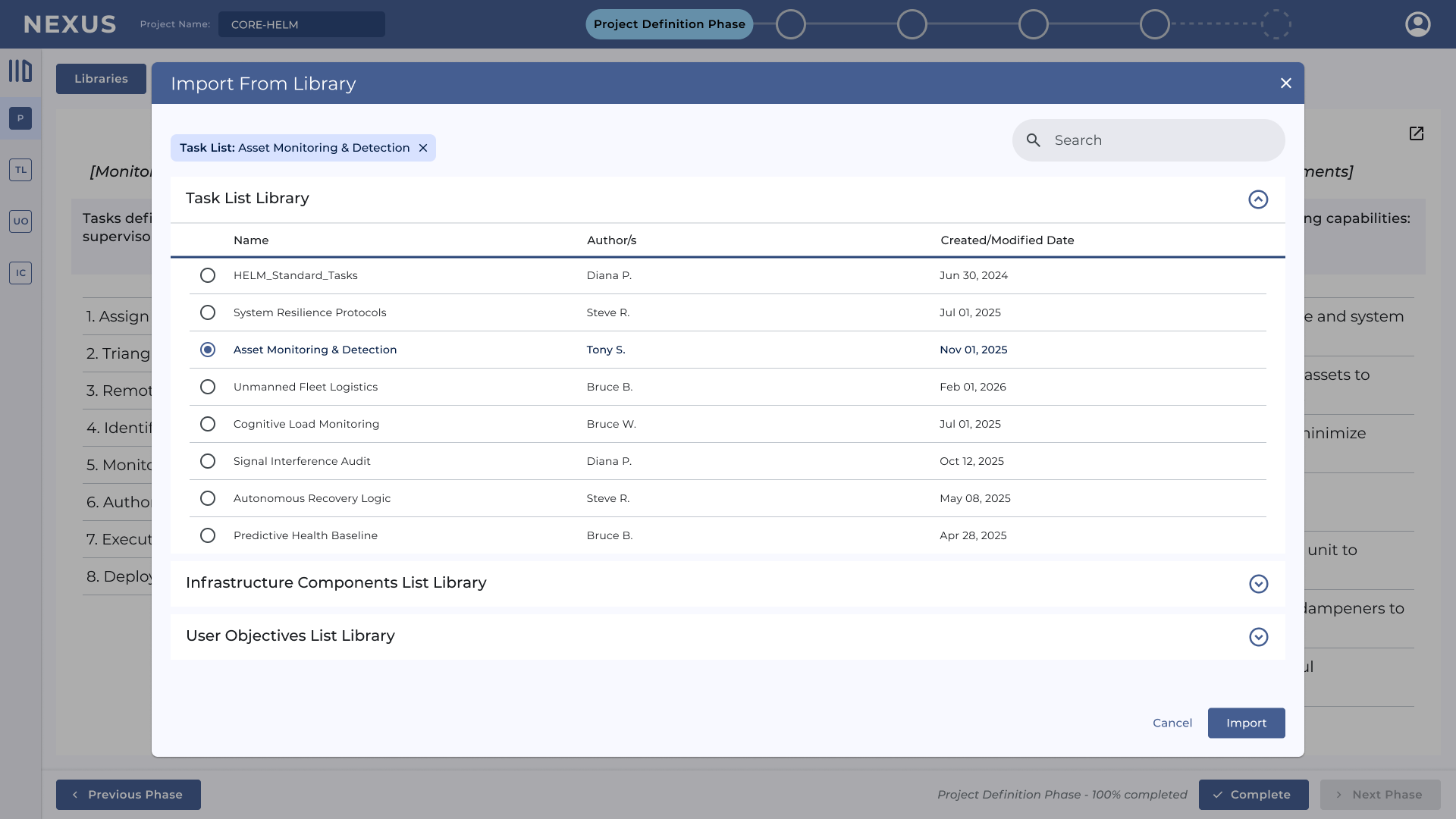
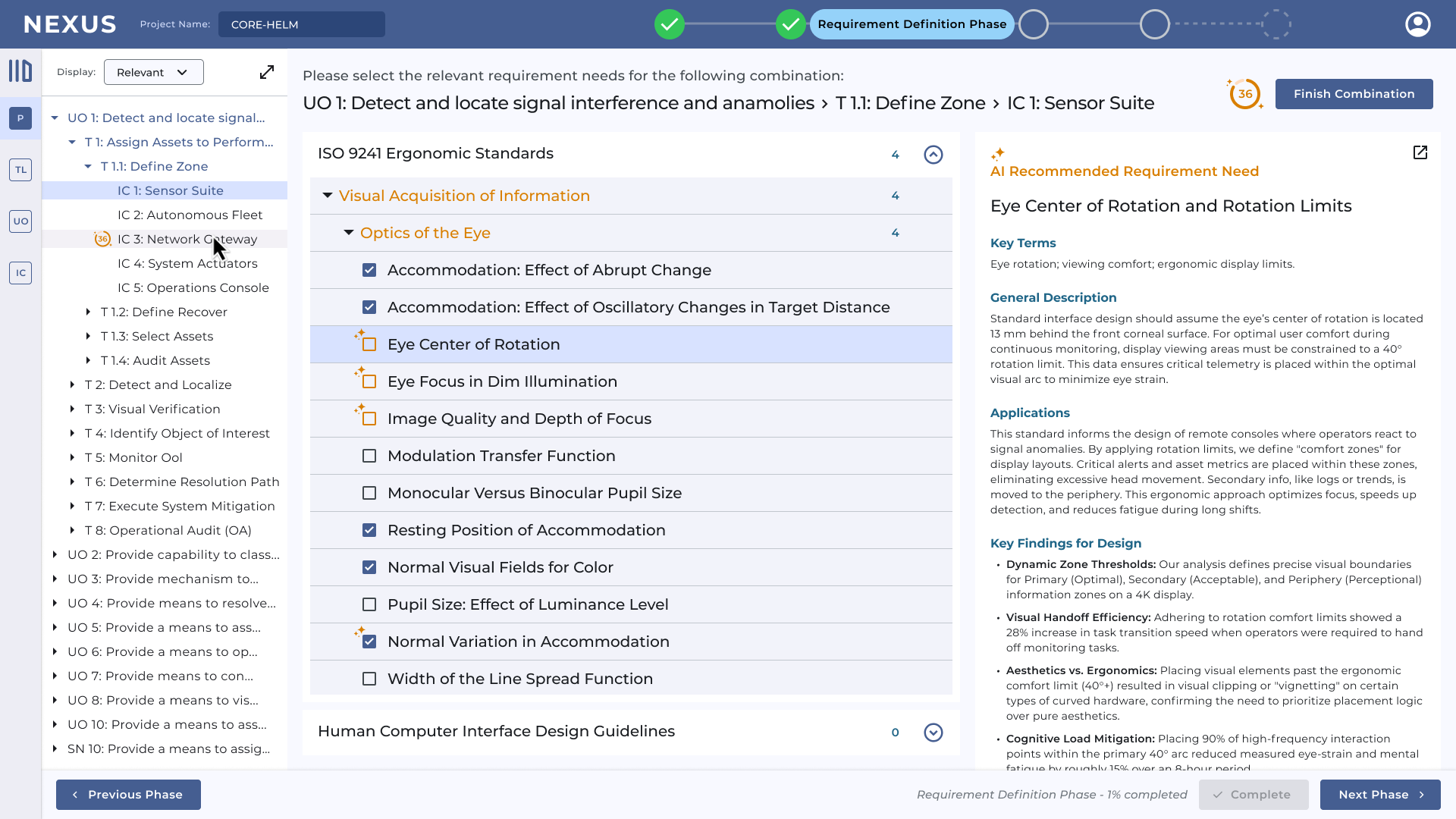
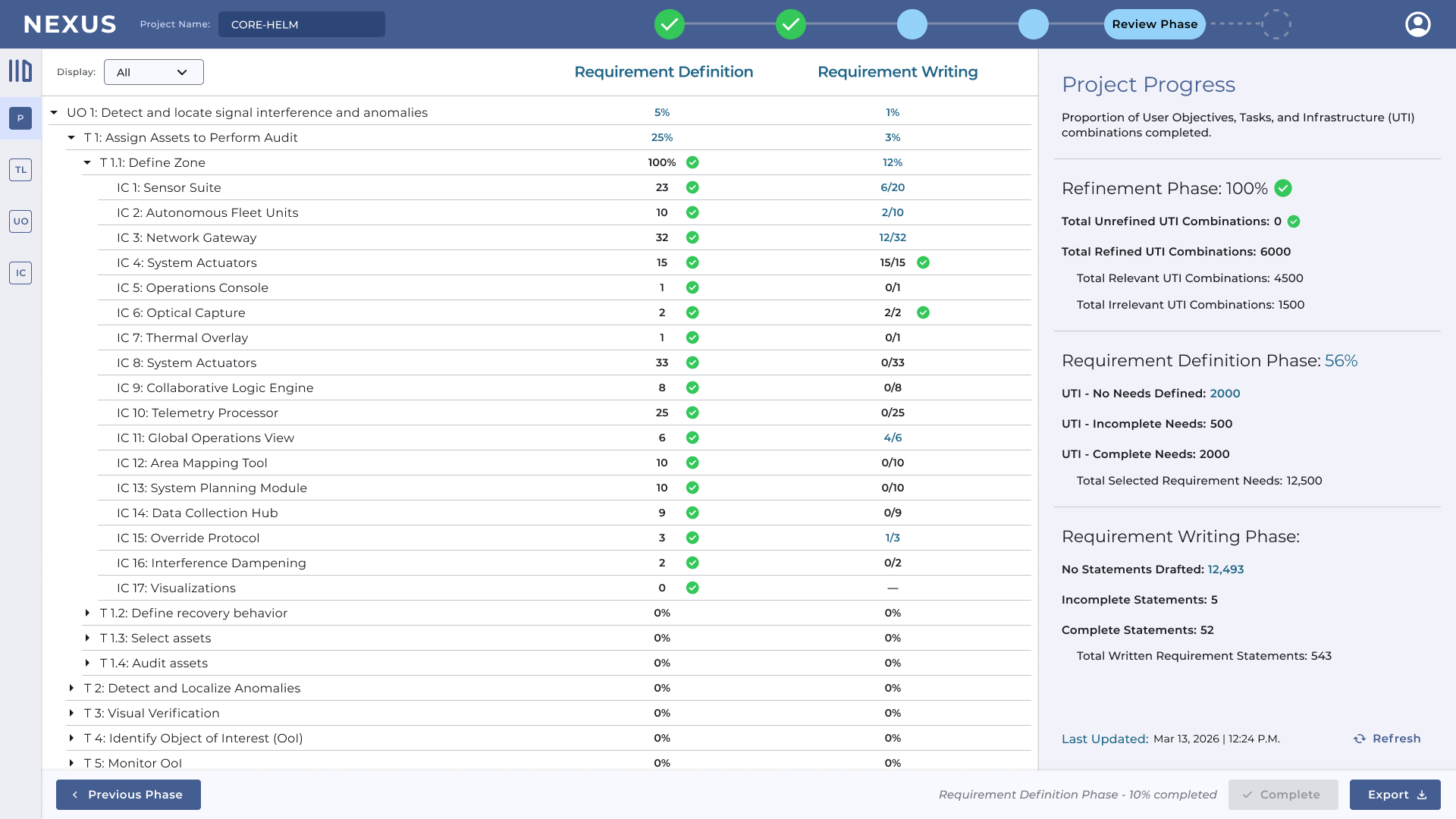
Architecting scalable UI systems for AI-driven human factors engineering
-
Working alongside a UX designer and Human Factors researchers, the challenge was to translate a massive, multi-dimensional data model into a high-density, functional interface. I was tasked with building a visual system capable of managing over 6,000 unique data combinations while maintaining a clear hierarchy for AI-generated recommendations and complex technical documentation.
-
As the Senior Product Designer, I was responsible for the visual architecture and design system execution. I led the development of the UI framework, ensuring that the complex logic and research defined by the team were translated into an intuitive, scalable interface. My focus was on systematic consistency—bridging the gap between the LLM’s technical outputs and a professional, high-performance workspace.
-
UI System Architecture: Developed a robust component library in Figma designed for data-heavy enterprise tools, utilizing variables and auto-layout to manage complex nested navigation states.
Systematic Interaction Patterns: Established a standardized set of patterns for the "Review" and "Refinement" phases, creating a cohesive visual language across the entire project lifecycle.
Design-to-Engineering Alignment: Streamlined the implementation of the AI service architecture by aligning UI components with the underlying data structures to ensure a seamless flow from LLM output to the front-end.